

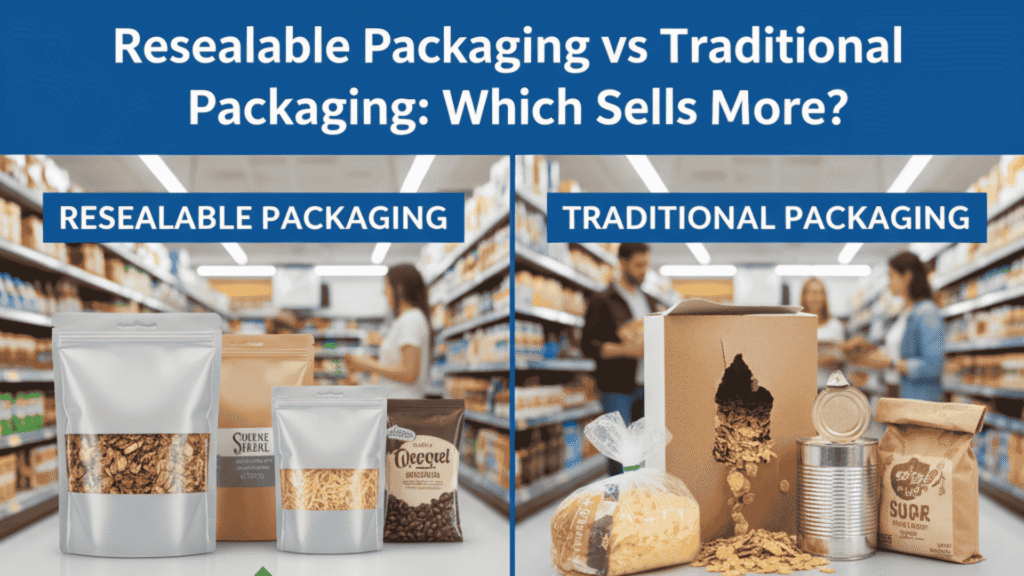
In today’s competitive retail environment, packaging plays a significant role in driving sales and influencing consumer behavior. Brands are increasingly exploring new ways to make their products more convenient, appealing, and user-friendly. Among these trends, resealable packaging has emerged as a popular alternative to traditional packaging. But the question remains: resealable packaging vs traditional packaging, which sells more?
This blog explores the differences between resealable and traditional packaging, highlights the benefits of resealable solutions, and provides insights into how packaging influences consumer purchases and sales.
Understanding the Basics: Resealable vs Traditional Packaging
Traditional packaging refers to conventional packaging formats such as paper bags, standard plastic bags, jars, and bottles that are sealed permanently or opened once. Once the consumer opens traditional packaging, it is often difficult or impossible to re-seal, which can affect product freshness and usability.
On the other hand, resealable packaging includes packaging with features such as zippers, adhesive strips, or press-to-close seals. These packages allow consumers to open and close the product multiple times while maintaining freshness, reducing waste, and providing convenience.
In the ongoing debate of resealable packaging vs traditional packaging, resealable options are increasingly favored by both consumers and brands for their practicality and ability to enhance product value.
Consumer Convenience Drives Sales
One of the most important factors in determining which packaging sells more is consumer convenience. Today’s shoppers prioritize products that are easy to use and store. Resealable packaging benefits sales because it allows customers to consume a product over time without worrying about spoilage or mess.
For example, snack products, pet food, and powdered beverages often perform better in resealable formats because they maintain freshness and are easier to store. Surveys and retail data show that consumers are willing to pay slightly more for products with resealable features, which can directly impact sales figures.
In contrast, traditional packaging may not offer the same level of convenience, which can limit repeat purchases and brand loyalty. When comparing resealable vs traditional packaging sales, products with resealable features often outperform conventional options in both supermarkets and online retail. Explains how mapping customer interactions from awareness through loyalty helps convenience stores improve experience, increase sales, and build lasting customer relationships.
Enhancing Product Freshness
Another key factor affecting resealable vs traditional packaging sales is product freshness. Traditional packaging may expose products to air, moisture, or contamination once opened. This is especially critical for food items such as cereals, snacks, nuts, and coffee, where freshness directly impacts taste and quality.
Resealable packaging benefits sales because consumers trust that the product will remain fresh longer, leading to higher customer satisfaction and repeat purchases. In many studies, customers have reported that they are more likely to repurchase products packaged in resealable formats, further proving which packaging sells more. Guide to choosing resealable bags by type, size, and thickness for product protection, convenience, and branding benefits
Sustainability and Reduced Waste
Sustainability is a growing concern for modern consumers. Packaging that reduces food waste or allows products to be stored longer can significantly influence buying decisions. Resealable packaging vs traditional packaging often shows a clear advantage when it comes to sustainability.
By enabling consumers to use products gradually without spoilage, resealable packaging minimizes waste. Additionally, many resealable packages are now made from recyclable or eco-friendly materials, which appeals to environmentally conscious buyers. This benefit can enhance brand perception and drive sales in competitive markets.
Branding and Market Differentiation
Packaging is not just functional, it is a powerful marketing tool. Brands that adopt resealable packaging can differentiate themselves from competitors who rely on traditional packaging. Eye-catching resealable designs, along with clear messaging about convenience and freshness, can boost shelf appeal and influence purchasing decisions.
When evaluating resealable vs traditional packaging sales, brands that invest in resealable packaging often report higher engagement rates, better brand recall, and increased customer satisfaction. In crowded retail spaces, these subtle differences can be decisive in which packaging sells more.
Cost Considerations
While resealable packaging can offer numerous advantages, it often comes at a higher production cost compared to traditional packaging. However, the long-term benefits, such as increased sales, higher repeat purchase rates, and reduced returns due to spoiled or damaged products, often outweigh the initial investment.
When comparing resealable packaging vs traditional packaging, businesses must consider both the upfront cost and the potential impact on sales. Many brands find that the additional investment in resealable features leads to better profitability through enhanced product appeal and customer loyalty.
Applications Across Industries
Resealable packaging benefits sales across a wide range of industries, including:
- Food & Beverages: Snacks, coffee, frozen foods, and powdered drinks maintain freshness and portion control.
- Pet Care: Pet food in resealable bags reduces spillage and preserves product quality.
- Healthcare & Pharmaceuticals: Supplements and medical powders benefit from resealable formats to maintain hygiene and dosage accuracy.
- Consumer Goods: Laundry detergents, wipes, and household products can be resealed to prevent contamination and maintain usability.
These examples demonstrate that the impact of resealable vs traditional packaging sales is not limited to one sector; it applies wherever product longevity, freshness, and convenience matter.
Real-World Sales Insights
Multiple market studies indicate that products with resealable packaging consistently outperform those with traditional packaging in terms of sales. For instance:
- Snack foods in resealable bags often see a 15-20% increase in repeat purchases.
- Coffee and powdered beverage products in resealable pouches report higher customer satisfaction and brand loyalty.
- Pet food packaged in resealable formats often shows better shelf performance in supermarkets.
These trends clearly answer the question of which packaging sells more: resealable packaging generally has a measurable impact on sales and consumer preference.
Future Trends in Packaging
The shift from traditional to resealable packaging is expected to continue as consumers increasingly demand convenience, sustainability, and product safety. Innovations such as smart resealable designs, eco-friendly materials, and multifunctional packaging features are likely to shape the future of retail packaging.
Brands that adopt these trends early can leverage the advantages of resealable packaging to benefit sales and outperform competitors relying solely on traditional formats.
Conclusion
When comparing resealable packaging vs traditional packaging, it is evident that resealable options offer clear advantages in convenience, freshness, sustainability, and brand appeal. These benefits translate into higher consumer satisfaction, repeat purchases, and stronger sales performance.
While traditional packaging may still be suitable for certain products or price-sensitive markets, data suggests that which packaging sells more is increasingly leaning towards resealable formats. By investing in resealable packaging, brands can not only improve sales but also enhance their market presence and long-term customer loyalty.
In the modern retail landscape, resealable vs traditional packaging sales clearly demonstrate that convenience, freshness, and usability are critical factors in influencing consumer choice. iSell Packaging offers high-quality custom and plain retail, grocery, tote, and specialty bags, manufactured in the USA for versatile packaging needs. Reach out to us for custom retail, paper, plastic, and specialty packaging solutions with personalized support and expert assistance.
FAQs
1. What is the main advantage of resealable packaging over traditional packaging?
The main advantage is convenience, as resealable packaging maintains freshness and allows multiple uses, increasing customer satisfaction.
2. Does resealable packaging boost sales?
Yes, studies show that resealable packaging benefits sales by driving repeat purchases and improving product appeal.
3. Is resealable packaging more expensive than traditional packaging?
It may have higher production costs initially, but increased sales and customer loyalty often offset the investment.
4. Which packaging sells more in the current market?
Overall, resealable packaging vs traditional packaging trends indicate that resealable packaging generally performs better in sales and customer preference.


