

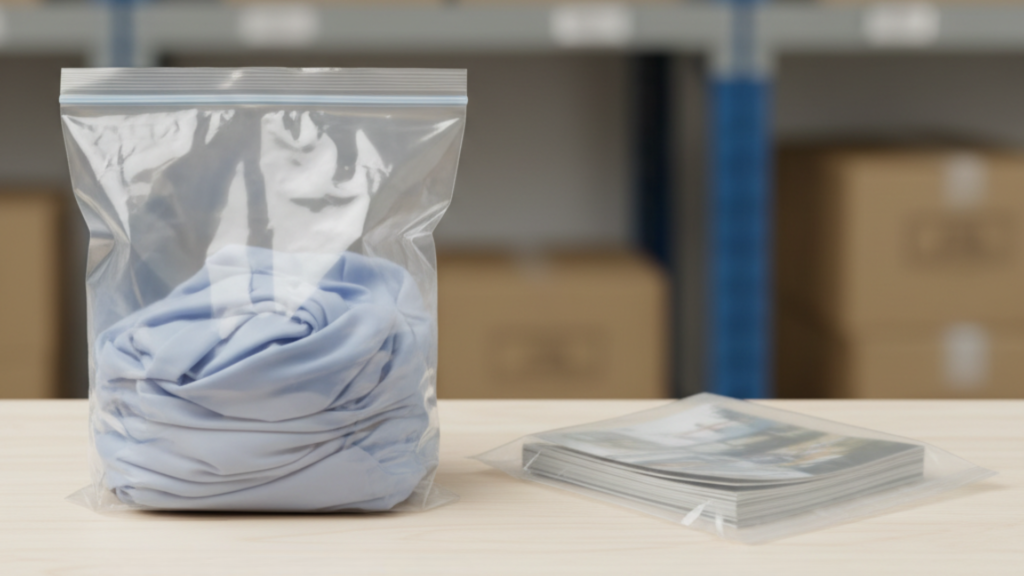
When it comes to poly bag types and packaging solutions, understanding the differences between gusseted vs flat poly bags is essential for choosing the right product for your business needs. Whether you’re packaging food, retail items, industrial parts, or bulk materials, selecting the correct design impacts storage, presentation, and protection.
In this detailed guide, we’ll explore what makes gusseted poly bags and flat poly bags unique, where each one excels, and how a poly bags comparison can help you select the best solution for your applications.
What Are Flat Poly Bags?
Flat poly bags are simple, two-dimensional bags made from polyethylene film that lies flat until opened. These bags typically have an open top and no expandable sides or bottom. They are lightweight, flexible, and versatile – ideal for simple containment and protection of products.
Common Uses of Flat Poly Bags:
-
Small parts storage (e.g., screws, bolts)
-
Retail packaging (e.g., accessories, textiles)
-
Mailer inserts and protective covers
-
Document and sample protection
Because they don’t expand, flat bags are best for items that already lie flat or don’t require extra volume.
What Are Gusseted Poly Bags?
In contrast, gusseted poly bags come with additional folds (gussets) that allow the bag to expand outward, offering greater volume and flexibility. These bags are sometimes called expandable poly bags because the gussets make room for larger or bulkier items.
There are several types of gusseted bag designs:
-
Side Gusset Bags: These have folds on both sides that expand outward to accommodate thicker items.
-
Bottom Gusset Poly Bags: These open from the bottom, creating a box-like base when expanded – perfect for heavy or oddly shaped products.
Key Differences: Gusseted vs Flat Poly Bags
1. Shape and Expansion
-
Flat Poly Bags: Do not expand — their capacity is limited to the flat film area.
-
Gusseted Bags: Expand outward when filled, providing more room and versatility.
2. Capacity and Volume
-
Flat Bags: Best for thin or flat items.
-
Gusseted Packaging Bags: Ideal for bulkier or higher volume products like textiles, large hardware, and bulk grains.
3. Storage and Shelf Display
-
Flat Poly Bags lie flat, making them easier to stack or store when empty.
-
Gusseted bags stand up better and can hold their shape, which aids in retail presentation.
4. Cost Considerations
-
Flat bags tend to be more affordable due to simpler construction.
-
Gusseted options are slightly higher in cost but offer higher utility.
5. Use Case Flexibility
-
Flat Bags: Excellent for straightforward containment.
-
Gusseted Bags: Work well across industries needing extra volume or multiple product combinations within one bag.
This poly bags comparison makes clear that neither design is universally better — each excels in different scenarios.
When to Choose Flat Poly Bags
Flat poly bags are ideal when:
-
Minimal packaging is needed
-
Product dimensions are slim or flat
-
Lightweight protection is sufficient
-
You need economical, high-volume packaging
They are a staple in many industries from small parts suppliers and craft packaging to document protection and retail goods.
When to Choose Gusseted Poly Bags
Gusseted poly bags are the choice when you need:
-
More interior volume without bulk packaging
-
Packaging that can handle irregular or thicker objects
-
A more structured bag that can stand or hold shape
-
Retail display where appearance matters
Because they are flexible yet expandable, gusseted options adapt well to evolving product lines.
Side Gusset Bags vs Bottom Gusset Poly Bags
Within the broader category of gusseted solutions, understanding side gusset bags vs flat bags and bottom gusset poly bags matters:
-
Side Gusset Bags: These allow the bag to expand in width, great for items like folded apparel, larger hardware sets, or multiple grouped goods.
-
Bottom Gusset Poly Bags: When laid flat, these form a more box-like structure when opened. They are perfect for bulkier, heavier, or boxed content like books, food staples, or multi-item packs.
Both types fall under the broader umbrella of gusseted packaging bags but serve subtly different use cases.
Advantages of Using Gusseted and Flat Poly Bags
Protection
Poly bags provide moisture resistance and barrier protection from dust, dirt, and handling — especially important for food, industrial parts, and sensitive components.
Versatility
With multiple dimensions and thickness options, both gusseted and flat bags adapt to countless product types.
Cost-Effectiveness
Compared to rigid packaging like boxes or clamshells, poly bags are lightweight and cost-efficient in both material and shipping.
Customization
Both bag types can be custom printed with logos, handling instructions, or brand graphics — offering marketing opportunities along with utility.
How to Choose Between Gusseted vs Flat Poly Bags
Ask yourself:
-
What is the shape and size of the product?
-
Will product volume vary?
-
Do I need bags that can stand upright?
-
Is cost a primary constraint?
-
Will the packaging be part of the retail display?
Answering these questions will guide you toward the right bag type.
Poly Bag Types by Thickness and Material
Both flat and gusseted bags are available in various materials such as low-density polyethylene (LDPE), high-density polyethylene (HDPE), and specialty blends for extra durability or barrier performance. Higher gauge options are available for heavier products or shipping needs.
Conclusion
Understanding gusseted vs flat poly bags, the differences between gusseted poly bags and flat poly bags, and how each performs in real-world packaging applications is essential for smart inventory, retail presence, and product protection.
Whether you need minimal containment with flat poly bags, or expanded capacity with gusseted packaging bags, iSellPackaging offers a full range of poly bag types to meet your packaging needs. With the right selection, your products stay protected, presentable, and ready for storage, handling, or sale.
Frequently Asked Questions (FAQs)
1. What is the main difference between gusseted and flat poly bags?
The key difference lies in expansion — gusseted bags can expand outward to hold bulkier items, while flat bags remain flat and better suited for thin, simple products.
2. Are gusseted bags more expensive than flat poly bags?
Yes, gusseted bags typically cost slightly more due to their more complex design, but they offer higher utility for larger or irregular items.
3. Can I use flat poly bags for retail displays?
Absolutely — flat bags are suitable for retail, but they work best when the product doesn’t need extra volume or structure.
4. What are side gusset bags used for?
Side gusset bags expand in width, making them ideal for packaged goods like garments, grouped parts, and thicker items that need extra room.
5. Are expandable poly bags the same as gusseted bags?
Yes — “expandable poly bags” is another term for gusseted bags, referring to their ability to open wider than flat bags.


