


One of the most significant tasks of any investigation is the proper treatment of evidence. The manner in which evidences are collected, packaged, and kept can impact the court verdict. And this is easy to see why.
The integrity of evidence such as fingerprints, biological fluids (like blood and saliva), hairs, and fibers is important to maintain. Nevertheless, it is highly vulnerable to degradation caused by environmental exposure and mishandling.
That is why police evidence bags are designed to ensure that items are not contaminated, tampered with, or damaged by the environment.
It is important to know the various categories of evidence bags and how to use them correctly. This guide takes you through the most popular ones, their characteristics, and the best practices that make evidence reliable and admissible.
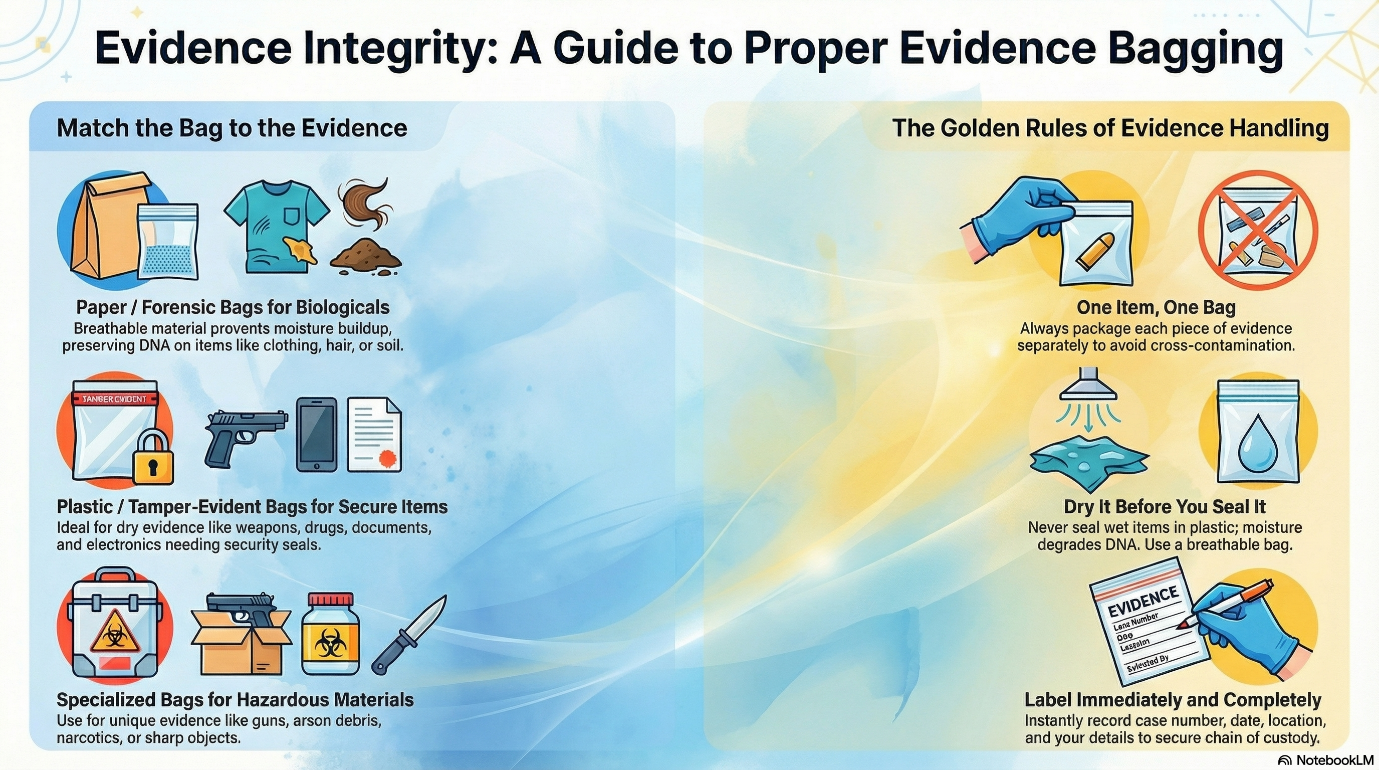
The Importance of Evidence Packaging.
All investigations are based on the integrity of physical evidence. When objects are collected from a crime scene, they usually have traces of fingerprints, fibers, blood, DNA, soil, or chemical traces. This information can only be useful if it is not changed or altered.
Crime scene evidence bags are supposed to safeguard evidence in three significant ways:
Preventing contamination
The improper packaging may ruin the fingerprints or confuse the evidence of two different objects.
Chain of custody.
The investigators are required to show the location of finding the item, who touched it, and how it was stored.
Preserving the items against damage.
Moisture, light, dust, and physical pressure may destroy a fragile substance.
Different Types of Police Evidence Bags
There is no single type of bag that works for every situation. The features and different materials are useful depending on what is being collected. The most frequently used bags are listed below.
Tamper Evident Bags
Tamper-evident bags are the standard choice for many items.
These bags have a special seal, which is evident in case somebody attempts to open or manipulate the contents. These bags may be characterized by such features as:
- Void tape or tamper tape
- Serialized numbers
- Tear-off receipts
- Barcode tracking
- Writable blocks of information.
The cash, documents, mobile phones, small personal items, and digital storage devices are usually stored in these bags. They provide a high degree of security, as well as ease in tracing the chain of custody.
Forensic Evidence Bags
The forensic evidence bag is designed in a way that preserves delicate evidence like DNA, fibers, or biological evidence. They are typically made using breathable paper that prevents the accumulation of moisture that may ruin the DNA or cause mould. These bags are ideal for:
- Clothing with bodily fluids
- Hair samples
- Fibers or tissues
- Soil samples
- Fire debris
Paper forensic bags help keep the evidence dry and clean. They also enable the investigators to label, seal, and record every item in a clear way.
Plastic Evidence Bags
Plastic police evidence bags protect the contents from outside factors such as dirt, rain, or chemicals. These bags are tough and transparent. As they are clear, authoritative personnel can easily identify the contents without the need to open them.
Plastic bags are best for:
- Weapons (when rendered safe)
- Tools
- Drug paraphernalia
- Powder and liquid containers.
- Electronics (dried and switched off)
However, plastic bags should be avoided for anything that has moisture, as it may lead to the degradation of biological samples.
Specialized Crime Scene Evidence Bags
There are some pieces of evidence that need special or heavy-duty wrappings. These are specialized crime scene evidence bags that include
- Gun evidence bags—
Made using reinforced materials to keep armed weapons safe.
- Arson and fire debris bags—
Equipped with foil-lined layers maintaining chemical vapors are often built.
- Narcotics bags—
Designed to avoid leakages and cross-contamination.
- Sharp object bags—
Durable enough to carry needles, broken glass, or blades.
Paper Evidence Bags
There are a number of common uses of paper bags within the forensic field. They allow air to pass through and therefore limit the potential for bacteria to grow. They are simple and inexpensive. Moreover, these bags are very effective for a wide range of different biological samples. Paper evidence bags find their uses in the collection and storage of clothing, shoes, fabric, and other materials that are porous.
Vacuum-Sealed Evidence Bags
Vacuum-sealed evidence bags do not allow air to enter the bag. This feature also allows for the contents to stay dry, thus preventing decay and avoiding oxidation. It is used for trace evidence or materials that require long-term preservation.
Key Features to Consider in Evidence Bags
When choosing the right bag, there are a few essential features that help ensure secure and organized handling.
Durable Materials
To protect the contents, cardboard and hard plastic and reinforced paper are used, especially when in transit. Evidence bags used by police need to last and be weatherproof during all elements, as well as be wear and tear resistant during active handling.
Clear Labeling Areas
Each evidence bag should have spaces where vital information is written, including:
- Case number
- Date and time of collection
- Badge number and name of the officer.
- Location of recovery
- Description of the item
Good labeling minimizes errors and enhances the chain of custody.
Tamper Evident Seals
Whether tape-based or adhesive, tamper seals must show any attempt to open the bag. This prevents unauthorized access and protects the case.
Tracking Features
Modern bags come with barcodes or serial numbers. These make it easy to log items into evidence management systems.
Best Practices of Using Evidence Bags.
Wear Gloves and Change Them Often.
Fingerprints, sweat, or skin cells can be prevented by wearing gloves. Investigators should change gloves between handling different items to keep evidence clean.
Dry Items before Sealing
Plastic should never be used to seal wet items. Humidity may lead to mould or destroy DNA. In case of the impossibility of drying on-site, store the item in a breathable forensic evidence bag temporarily and label it.
The Right Bag, the Right Item.
Confusion of materials may jeopardize an investigation. For example:
- Paper bags for biological materials
- Plastic bags for non-porous objects
- Specialty bags for weapons or chemicals
- Tamper-evident bags for valuables or sensitive evidence
The appropriate packaging will minimize the chances of contaminating or damaging.
Label Bags Immediately
Never wait to label items. After sealing the evidence, note down all the necessary information. This will guard the chain of custody and prevent mix-ups.
Seal the Bag Properly
Ensure that the tamper seal is fully closed and operational.
Keep Items Separate
Every item should have its police evidence bag. Putting various items in a single bag makes it more prone to contamination, cross-transfer, or confusion of materials.
Keep Chain of Custody Forms
Each piece of evidence should be well-documented. This includes:
- Who collected it?
- Who transported it?
- Who opened or examined it?
- When and where was it stored?
Final Thoughts
The management of evidence is among the pillars of good police work. The correct police evidence bags assist in the prevention of tampering, contamination, and environmental damage of the items. Be it biological samples, electronics, weapons, or personal items, the choice of bag will make the evidence reliable.
Knowing the various categories of forensic evidence bags, the best practices, and the most frequent errors enables investigators to handle crime scene evidence bags with ease. This care in detail maintains the integrity of all the items and helps to a more robust and dependable investigation.
In case you require assistance with the selection of the most suitable tamper-evident bags or require a systematic system of packaging in your department, seek the quality suppliers specializing in law enforcement evidence bags. The correct instruments will assist you in safeguarding the truth and aid justice.
The Final Note:
It is quite understated to say that handling evidence carefully is one of the foundations of efficient investigations. Simple tools like police evidence bags play an important role in such a scenario. They maintain the integrity of biological samples, weapons, personal items, and electronics. However, it is equally important to understand the different types of forensic evidence bags as well as their usage.
At iSell Packaging, we offer high-quality evidence bags for every type of investigation by forensic agencies and private firms. We also provide a visual (PDF) sample of evidence bags so that you can determine their appearance. Get a quote now!


